



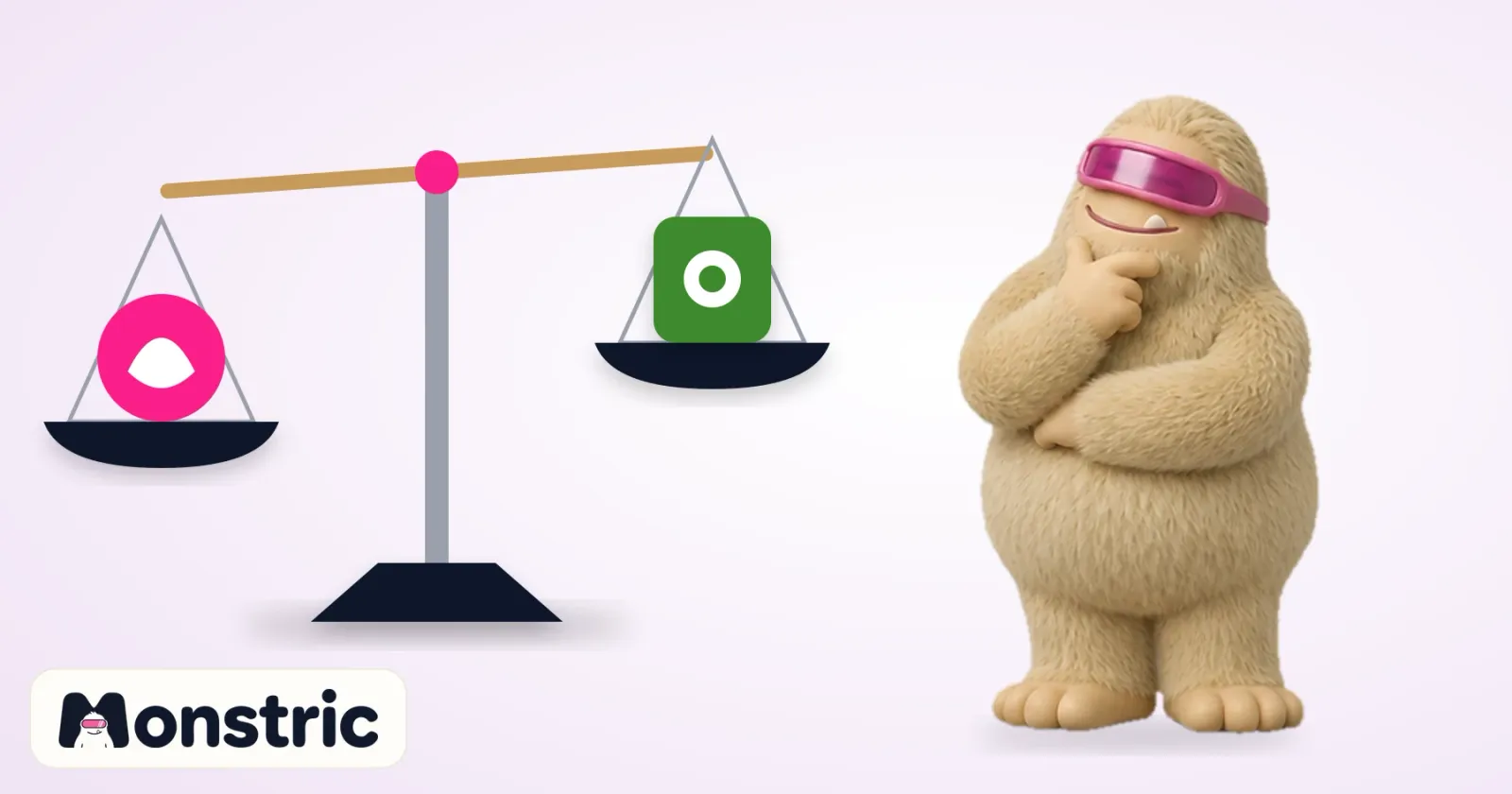
In the mascot vs logo choice, get a logo first. A mascot is optional, and it is worth adding only when people meet your business quickly or with feeling (food, kids, apps, a local shop with regulars) and you will use the character in many places. If you sell high-trust professional services, or nobody will keep the character consistent, choose a logo only.
A logo is the fixed mark that identifies you: sign, invoice, browser tab. A mascot is a character that gives the brand a face. They do different jobs, and a mascot can be built into the logo itself. We make Monstric, where a mascot is an option you choose, not something every brand gets, so we have a bias. We say below where a mascot is the wrong call.
Mascot vs logo: what each one does
A logo is a wordmark (your name in a chosen typeface), a symbol, or both. Our glossary entry on logo types lists the common kinds. Its job is recognition at small sizes and in a hurry: a van door, a search result, a receipt.
A mascot is an animal, a made-up creature, an object with a face or a cartoon person; the glossary entry on brand mascots defines it as a character that represents a business. A logo stays still. A mascot can wave on the homepage, hold a cup on a loyalty card or look confused on a 404 page.
A logo answers "who is this?". A mascot answers "what is this business like?"
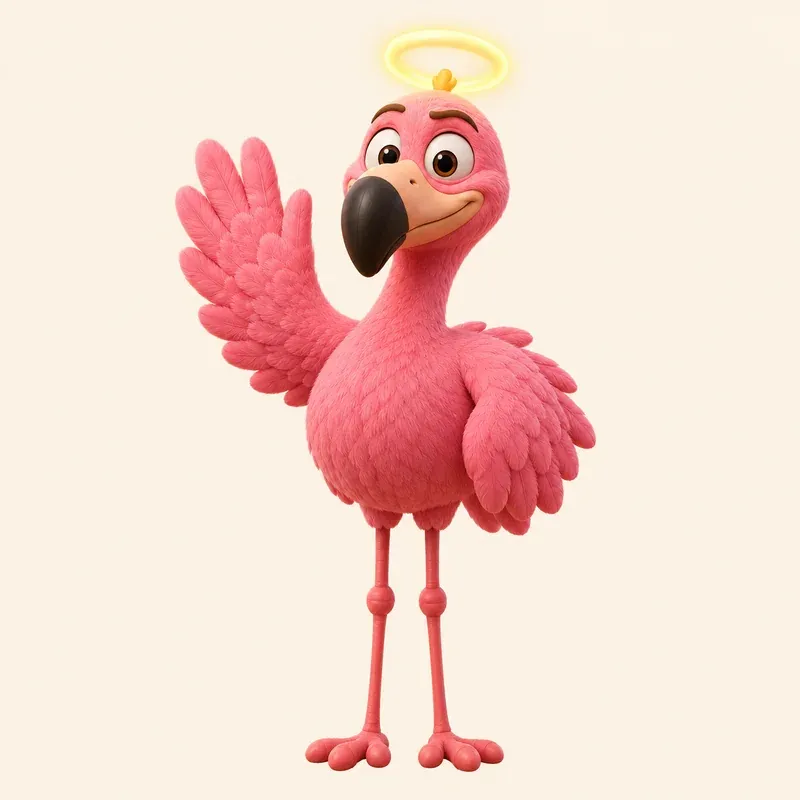
Flamito, a sample SaaS brand with a mascot made with Monstric, shows the idea: the character is the centerpiece of the brand rather than a side decoration. The Flamito example page shows it in use.
Three setups to choose from
Logo only. Wordmark or symbol, no character. The default and right for most businesses. Little can drift, so it is cheap to keep consistent.
Mascot logo. The character is the logo. The well-known case is KFC: according to Wikipedia's article on Colonel Sanders, the KFC logo is based on his appearance (page read 2026-11-17). One asset does both jobs, but the logo is now an illustration, which can be harder at tiny sizes or in one color.
Logo plus a separate mascot. The logo stays a clean mark, and the character lives in illustrations, packaging and the website. It is the most flexible setup, and the one we would pick for a cafe or an app. The cost is two things to maintain, plus a rule for how they appear together.
For why characters help a brand stand out, see why a mascot beats another purple gradient.
Choose a mascot if
- People meet your brand in a hurry or with feeling. Food, drinks, kids' and pet products, games and apps. A character on a cup sleeve does work a wordmark cannot.
- You have many places to put it. Packaging, a menu, a van, a loyalty card, stickers, an onboarding screen. A mascot used once is a logo with extra steps.
- You are local and personal. A family bakery or neighborhood cleaning company can use a character as a friendly stand-in, especially if the owner does not want to be the face.
- Your category looks the same everywhere. A character is harder to copy than a green leaf.
The vehicle is a good test. Here is a sample moving company brand, BubblArmor, on a van.
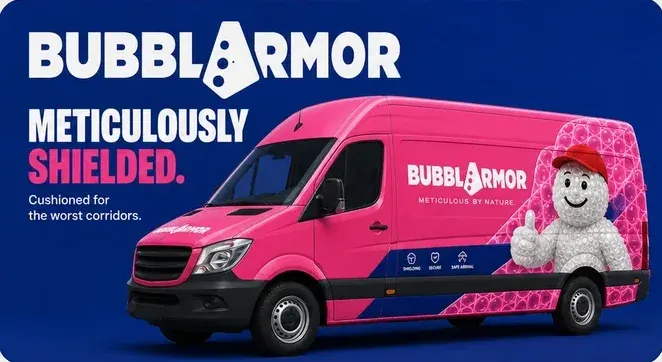
A van is seen for seconds, in motion. Ask whether your brand would be recognized in that glance.
Example (made up): a two-person home cleaning company called Tidy Heron. The logo is a plain wordmark and the mascot is a heron in rubber gloves, on the van, the invoice footer and the sticker left on the fridge. Customers remember "the heron people".
Characters can also last. According to Wikipedia's article on the Michelin Man (read 2026-11-17), the character first appeared in 1894 and was redrawn over time, for example shown no longer smoking in the 1960s and slimmer in 1998. The lesson is not "be Michelin": keep the core idea fixed and let details update.
Choose a logo only if
- You do not have the basics. If name, logo and colors are unsettled, a mascot adds a fourth moving part. Our guide to branding a new business from scratch covers the order.
- Your customers buy on trust and seriousness. A law firm, clinic or accountant can use a character, but many will not. This is judgment, not a rule.
- You cannot commit to it. One character drawn in three styles by three people is worse than none.
- You would use it in one place. If the plan is only "put it on the homepage", a good illustration or photo needs less upkeep.
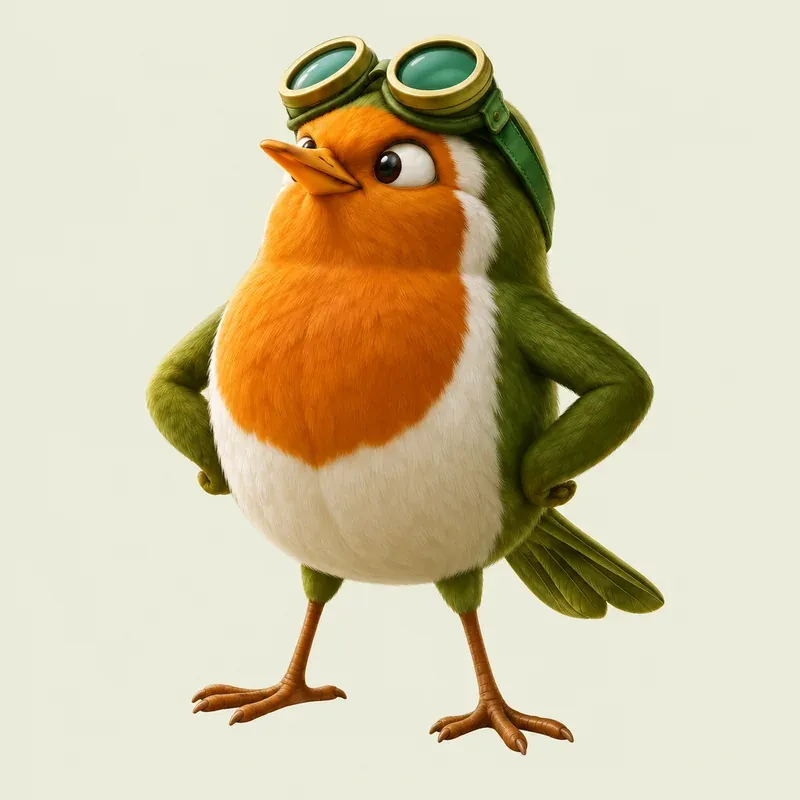
This is the ScrubRobin character, from a sample cleaning company brand made with Monstric. It is also a useful stress test, our suggestion rather than a rule: shrink your own character to browser-tab size and see what survives. For a detailed illustration like this one, it is usually only the silhouette and one or two colors.
What keeping a mascot consistent costs
- Fix three things. Species or type, main color and silhouette. Props and poses can vary.
- Make a pose set once. Around five poses (waving, pointing, thinking, celebrating, confused), saved as transparent files, so nobody redraws from memory.
- Write the rules down. Does it speak? Does it always sit next to the logo? Our brand guidelines template has a place for it.
- Think about protection. The USPTO says a trademark can be any word, phrase, symbol, design or combination that identifies your goods or services (page read 2026-11-17). Whether your character can be registered depends on your goods, your country and what exists. Our free trademark search screens names, not logos, and none of this is legal advice. If the character matters, ask a trademark attorney.
Decide in four questions
- Do customers meet us in a hurry, on something physical or on a small screen? Yes favors a mascot.
- Can we name five places the character would appear in the first year? Fewer than three, wait.
- Will one person own the character and say no to off-model versions? No, wait.
- Are name, logo and palette settled? No, fix that first.
Three or more yes answers in the first four: explore a mascot. Unsure: start with the logo; adding a character later is usually simpler than removing one people have grown fond of.
Getting a mascot without a design budget
You can hire an illustrator (most control, longest lead time), use an AI tool (fast, but you watch consistency), or choose something in between. Monstric lets you choose logo only or a mascot, and a mascot is optional. Downloads need a paid plan. Our mascot service is separate and done-for-you.
FAQ
Is a mascot only for kids' brands?
No. Adult brands use characters too. The question is whether your audience finds it warm or silly.
Should the mascot match my brand colors?
Yes. Its main color should come from your palette. Changing it later is closer to a redesign than a tweak.
Can the mascot be my social media profile picture?
Often, yes. A face crops well into a circle. Check it still reads at thumbnail size, and keep the plain logo for places where a character feels out of tone, such as an invoice.
See a brand with a mascot, then try yours
Describe your business in one sentence and see a free preview of your brand on a website header. Sign in with Google or email to generate it. A mascot is optional.
Sources
- Wikipedia, "Michelin Man", https://en.wikipedia.org/wiki/Michelin_Man, read 2026-11-17.
- Wikipedia, "Colonel Sanders", https://en.wikipedia.org/wiki/Colonel_Sanders, read 2026-11-17.
- United States Patent and Trademark Office, "What is a trademark?", https://www.uspto.gov/trademarks/basics/what-trademark, read 2026-11-17.